
How to Check Criminal History in Marion County
No single Marion County criminal record search returns every part of a history. The correct first stop depends on the question. The sheriff roster is for current or recent local custody. The Circuit Clerk holds Circuit and District case files. A city court holds its own municipal cases. ALEA provides a fingerprint-linked review of one's own statewide record, while ADOC covers people now serving Alabama prison sentences.
Start with a full legal name and known aliases. Add a date of birth when the official channel accepts it, and keep the event date, arresting agency, charge, city, or case number close at hand. Those details separate people who share a name and help a clerk find an older file.
- Define whether the need is custody, an arrest report, a court outcome, a statewide personal record, or prison status.
- Use the official county or state channel for that record type and note any case, booking, or AIS number returned.
- Compare the initial charge with the court docket because a filed charge may differ from the booking entry.
- Ask the record's custodian for a copy when the online view omits the needed filing or disposition.
- Request certification only from the issuing office when an authenticated Marion County criminal record is required.
Four Marion County Record Homes
Marion County criminal history moves through separate offices. The arresting agency writes the incident narrative. The jail creates the booking entry and takes fingerprints. The prosecutor and court turn allegations into filed charges and a disposition. ALEA then maintains the fingerprint-linked state repository using reports from those agencies. One record can lag behind another, so a missing disposition on an ALEA review may need proof from the clerk.
| Question | Official starting point | What it returns |
|---|---|---|
| Is someone in local custody? | Marion County sheriff roster | Current and released booking entries |
| How did a case end? | Marion County Circuit Clerk | Docket, orders, disposition, and sentence |
| What does my state record show? | ALEA Form 46 | Fingerprint-matched Alabama CHRI |
| Is someone in state prison? | ADOC Inmate Search | Current ADOC custody only |
The county courthouse directory illustrates the local office split. It places the clerk and justice offices at the courthouse, while sheriff and jail operations are based on Industrial Drive.
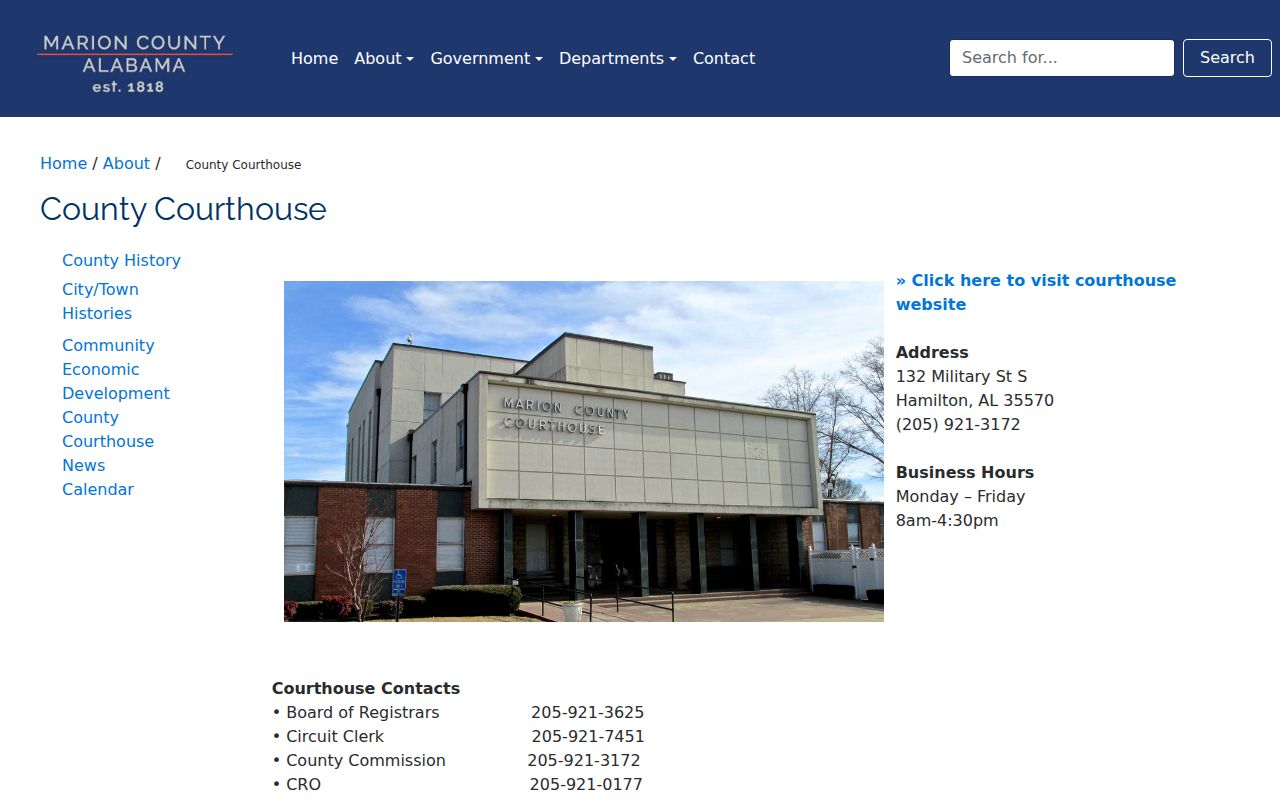
The directory image helps a visitor route a case-file request to the office that actually keeps it.
Official Alabama Background Checks
The Alabama Law Enforcement Agency State Bureau of Investigation keeps Alabama Criminal History Record Information. Alabama does not offer an unrestricted public statewide name search. Any person may instead review their own fingerprint-matched record with ALEA Form 46 instructions. The Alabama Background Check System is restricted to qualifying subscribers and is not a public people-search product.
Form 46 requires classifiable fingerprints from an authorized law-enforcement agency with an FBI-issued ORI, one accepted photo ID, and payment by cashier's check or money order. ALEA lists a $25 fee, $5 for each extra copy, and an expected wait of at least four to five weeks. Marion County does not publish a local fingerprint price or appointment schedule, so call the taking agency before going.
The official ALEA personal record-review page shows why the statewide process is based on identity and fingerprints.
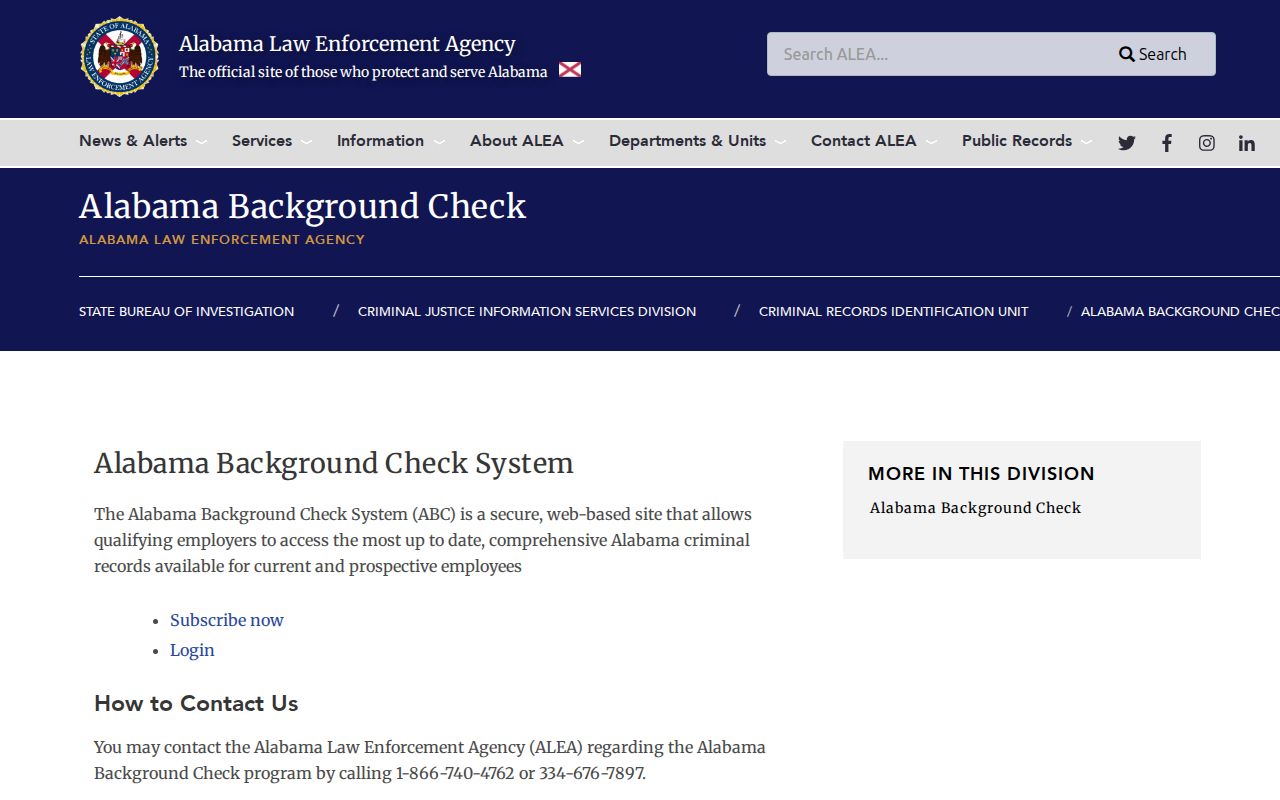
This is the route for checking and, if needed, challenging one's own Alabama repository record.
Marion Sheriff Record Requests
The Marion County Sheriff's Office does not publish a separately named records division, downloadable request form, copy-price list, or promised turnaround. Use the official public information channel, call 205-921-7433, or ask at 842 Industrial Drive in Hamilton. Describe the product precisely: incident report, booking entry, jail record, warrant confirmation, or another agency record.
Give the name, event date, location, and any incident, case, booking, or warrant number. Ask about identification, redaction, certification, cost, and delivery before sending funds. The form listed on the sheriff's Forms page is not a public-record request form. The Alabama Open Records Act is the legal fallback, but active investigations, juvenile matters, victim data, sealed content, and sensitive security or medical material may be withheld or redacted.
Marion County Sheriff and Jail
842 Industrial Drive
Hamilton, AL 35570
205-921-7433
24-hour phone; administration weekdays 8:00 a.m. to 4:30 p.m.
The Marion County Circuit Clerk is at 132 Military Street South, second floor, Hamilton, with 205-921-7451 as its main records number. The counter is open weekdays from 8:00 a.m. to 4:30 p.m. and closes from noon to 1:00 p.m.
Types of Criminal Records in Marion County
Each Marion County criminal record captures a different stage. An incident report contains the agency narrative and alleged basis. A booking record covers intake and initial custody. A court file shows formal charges, events, orders, outcome, and sentence. ALEA CHRI links reported arrest cycles to fingerprints and dispositions, while a warrant records judicial authority to arrest.
- Booking record
- Jail intake data, initial charges, booking time, arresting agency, and custody or release information.
- Case-action summary
- The dated event history for a court case, including settings, filings, orders, and disposition.
- Disposition
- The outcome of a charge, such as dismissal, acquittal, nolle prosequi, or conviction.
- CHRI
- Alabama's fingerprint-linked criminal history assembled from reporting agencies.
- Expungement
- A court process that removes a qualifying matter from ordinary public access while narrow official access remains.
Probation and parole add another layer. The Alabama Bureau of Pardons and Paroles handles state adult supervision, while a sentencing order in the Marion County court file establishes court-imposed probation.
Marion County Custody Layers
Local jail, state prison, and federal custody searches are not interchangeable. The Marion County roster has Current and Released tabs, name and date views, booking-date sorting, and profile cards. The profile can show age, gender, race, arresting agency, booking time, and charge descriptions. It does not promise a date of birth, judge, court date, statute, or full bond ledger. Call the jail for current bail, charge, and case-number details.
ADOC Inmate Search uses an AIS number or a name and covers current Alabama prison inmates, not county detainees, old prison records, or Youthful Offender Act cases.
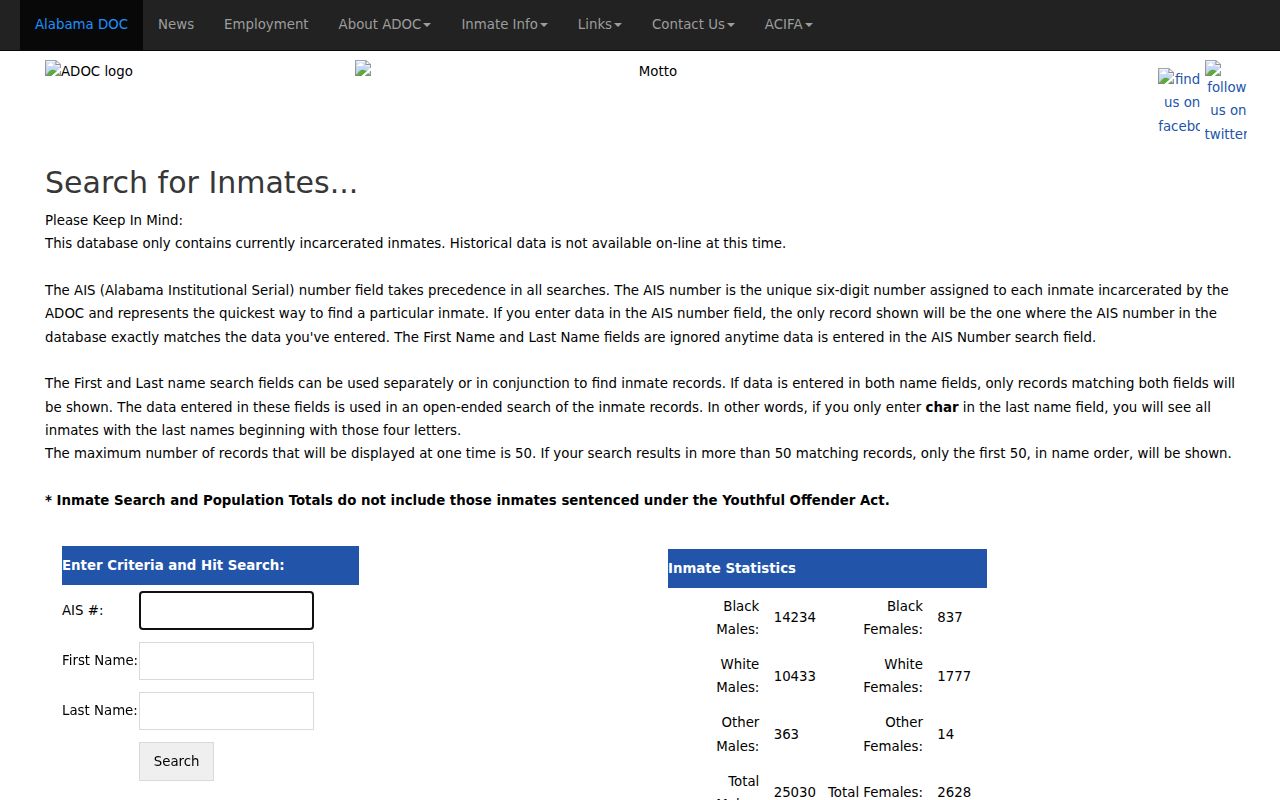
The ADOC image marks the point where a Marion County sentence has moved from a county case file into state custody.
Federal custody is separate again. The Federal Bureau of Prisons locator searches by federal identifier or name.
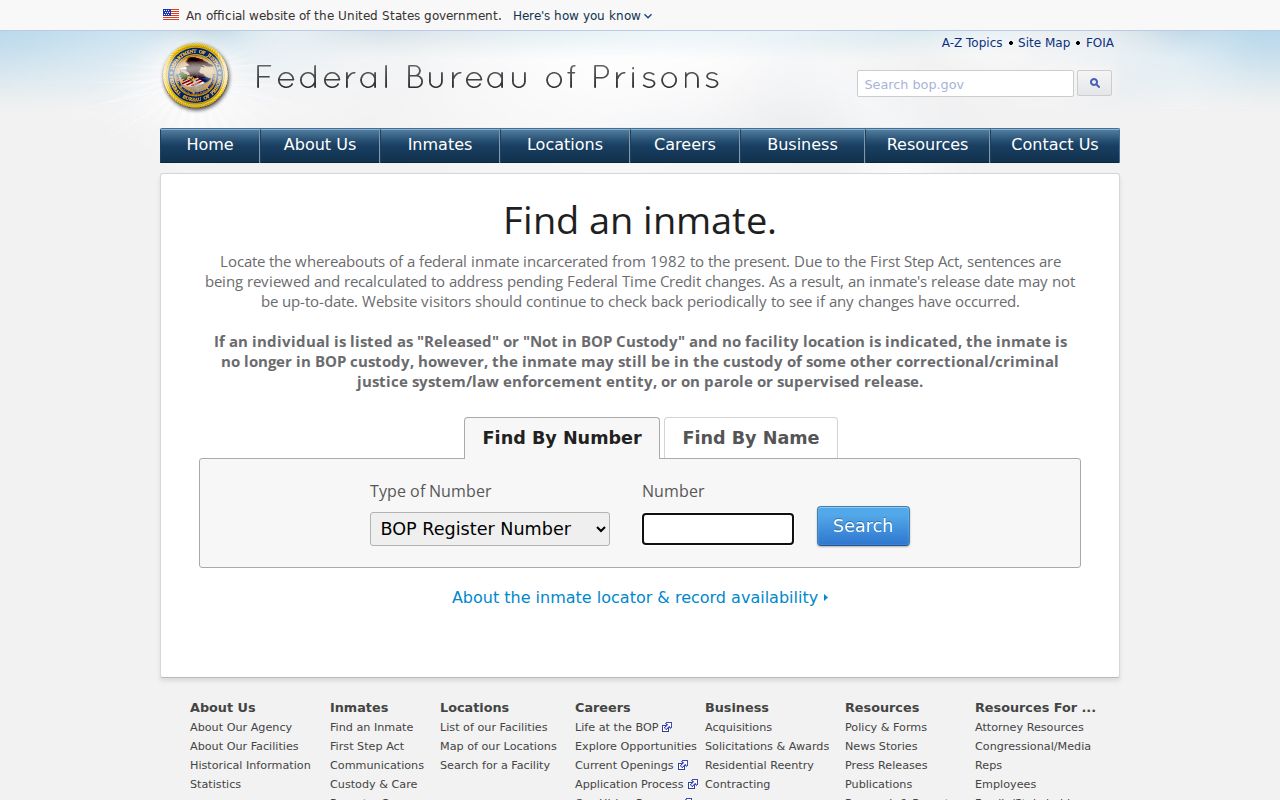
No federal prison was verified in Marion County, but the federal locator is the correct custody layer for a Northern District prosecution that led to incarceration.
What a Marion County Criminal Record Shows
A Marion County criminal record should be read in context. Identity fields help match the right person. Arrest and booking fields describe the initial event. Court entries reveal what prosecutors filed and how each count ended. Sentence and supervision fields show what followed a conviction. Not every product contains every field, and a roster is far narrower than a court file or ALEA review.
| Name & Identifiers | Legal name, aliases, date of birth or limited demographics, and agency identifiers when released. |
|---|---|
| Arrest / Booking Data | Arresting agency, intake time, initial charge, photograph, fingerprints, and release or custody status. |
| Charges & Statutes | Allegations at arrest and the formal counts later filed in Circuit, District, or municipal court. |
| Disposition | Dismissal, nolle prosequi, acquittal, plea, verdict, or other final result for each count. |
| Sentence | Jail or prison term, probation, fines, costs, restitution, and other terms when part of the judgment. |
| Custody / Supervision | Current jail or prison status and public portions of probation or parole outcomes. |
Read the date and source with each result. A current jail card, a certified disposition, and a repository record all serve different purposes.
Marion County Warrant Fallback
Marion County has no comprehensive public warrant portal. The sheriff publishes a selective Most Wanted interface, but a listing is not a full warrant index and does not prove that a warrant remains active. The reliable fallback is to call the sheriff, review the related court docket, and contact the issuing court for current status and resolution terms.
The official sheriff page shows the limits of a selective warrant-related list.
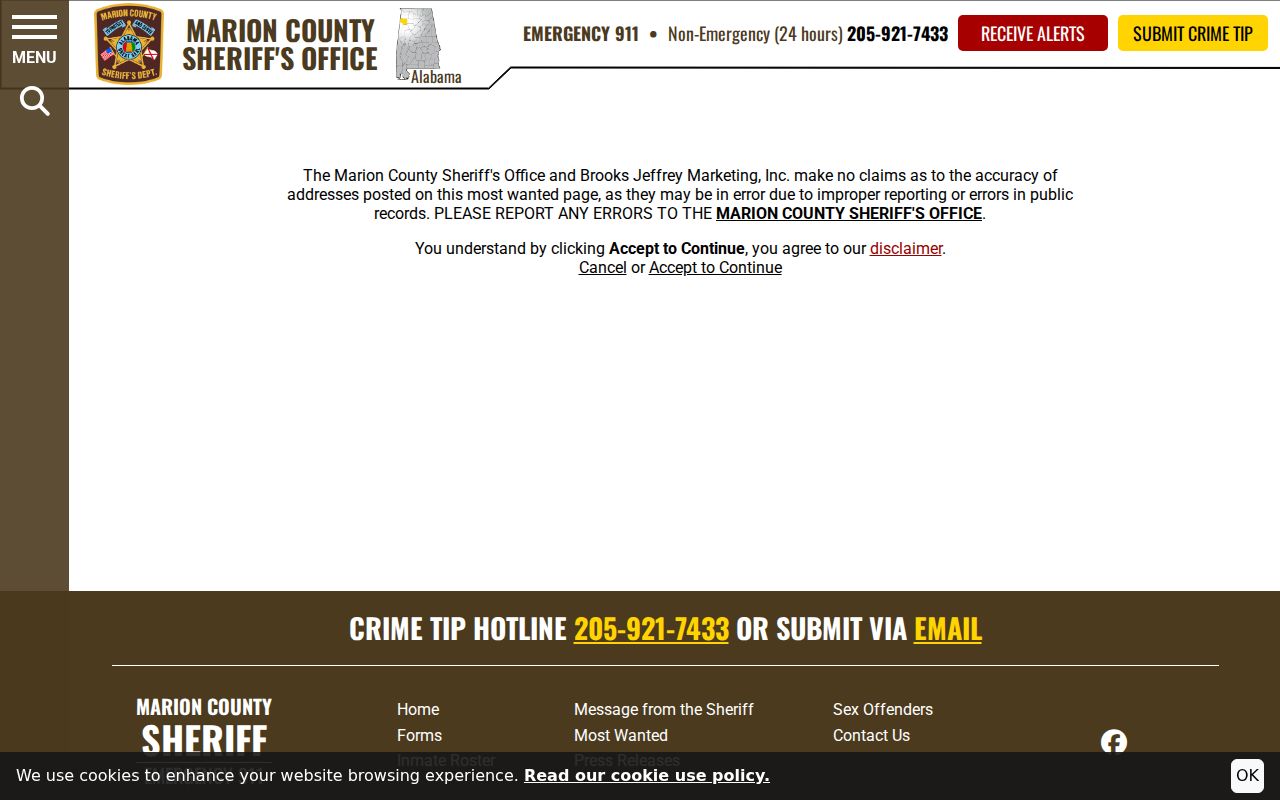
Municipal failure-to-appear warrants may start with Hamilton, Winfield, or Guin Municipal Court rather than the Circuit Clerk. Search warrants, sealed indictments, juvenile warrants, and active investigative material may remain unavailable.
Public Access Laws for Marion County Criminal Records
The Alabama Open Records Act supports inspection and copying of public writings, but it does not turn the state repository into an open name-search pool. Marion County agencies may redact or withhold protected categories. Court records also follow the Alabama Rules of Court-Record Privacy and Confidentiality, effective January 1, 2025, which preserve clerk-office viewing while protecting confidential identifiers and records.
Key Alabama laws:
Ala. Code § 36-12-40 gives citizens a right to inspect and copy public writings unless another law restricts access.
Ala. Code § 41-9-636 controls dissemination from the criminal history repository.
Ala. Code § 41-9-601 penalizes false-pretense access and unauthorized communication.
Ala. Code § 12-11-30 places felony jurisdiction in Circuit Court.
Ask the creator or custodian: arresting agency for the narrative, jail for booking, clerk for case outcome, ALEA for CHRI, ABPP for supervision, and ADOC for prison custody.
Marion County Federal Record Layer
Marion County lies in the U.S. District Court for the Northern District of Alabama. Federal criminal dockets belong in PACER, not Alacourt or the Marion County clerk terminal.
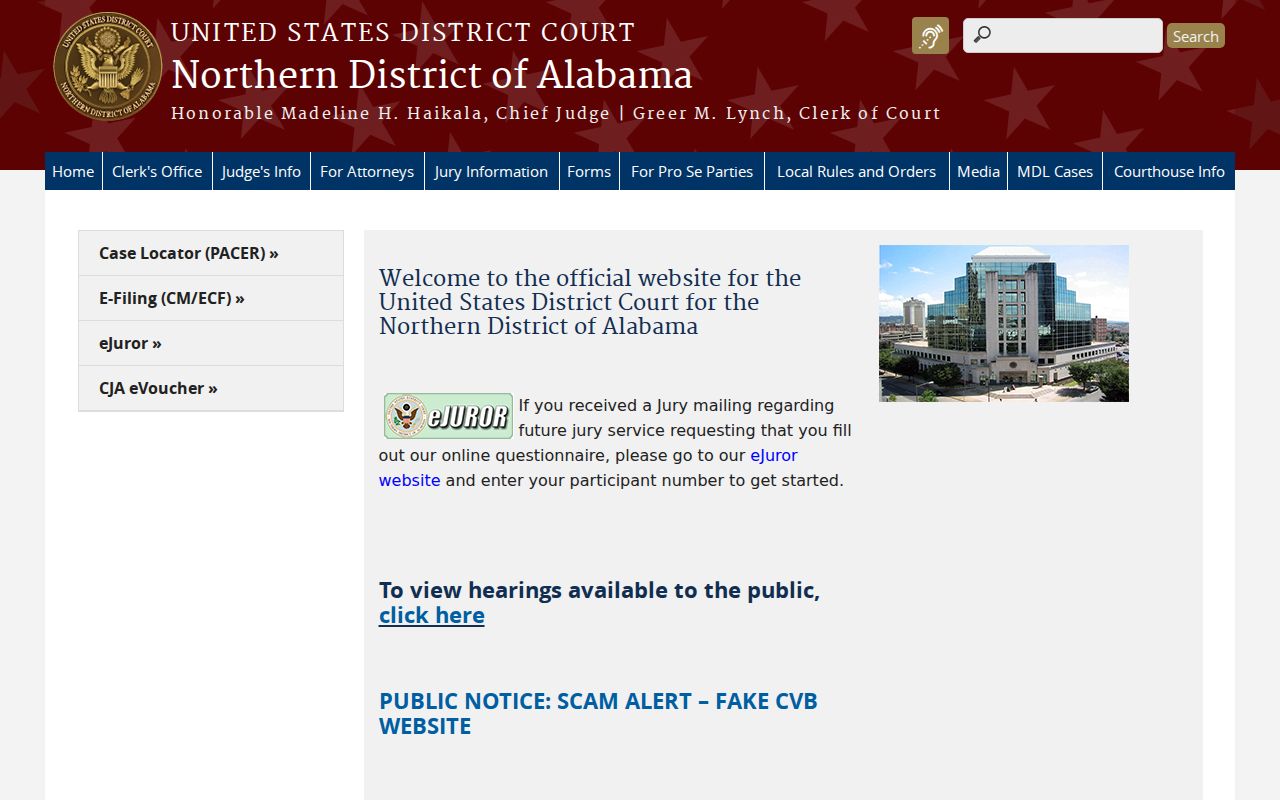
The federal court image identifies the court system that holds a federal Marion County criminal case.
PACER charges by page under its current fee rules, while the FBI Identity History Summary is the separate fingerprint-based route for reviewing one's own FBI-held identity history. Neither replaces a county docket or ALEA record. The federal layer should be checked only when the case, arresting agency, or custody facts point beyond Alabama state court.
Sealed, Expunged, and Restricted Records
Alabama expungement uses a petition in the Circuit Court where the charge was filed. For a Marion County charge, that means Marion County Circuit Court. Current CR-65 generally calls for one offense per petition, certified arrest and court records, a certified ALEA record, the statutory ground, all agencies that hold the record, and proof about financial obligations when required. The form states a $500 fee subject to indigency waiver, with separate arrests potentially requiring separate fees.
Eligibility depends on the charge, outcome, time passed, later history, and statutory exclusions. Class labels alone do not decide it. Juvenile and Youthful Offender records have separate confidentiality rules, and court privacy rules can mask protected information without an expungement. An order removes covered records from ordinary public access but leaves narrow criminal-justice and statutory access in place.
Marion County Supervision Records
Adult probation and parole are state-run through the Alabama Bureau of Pardons and Paroles. Its Hamilton Field Office is in Room 310 of the Marion County Courthouse and serves Marion County. There is no verified public probationer name database. Confirm court-imposed probation in the judgment, then use the field office for lawfully releasable supervision information. Parole hearing and result questions can go to the ABPP Public Information Unit.
The ABPP official site explains the Board and field-services structure.
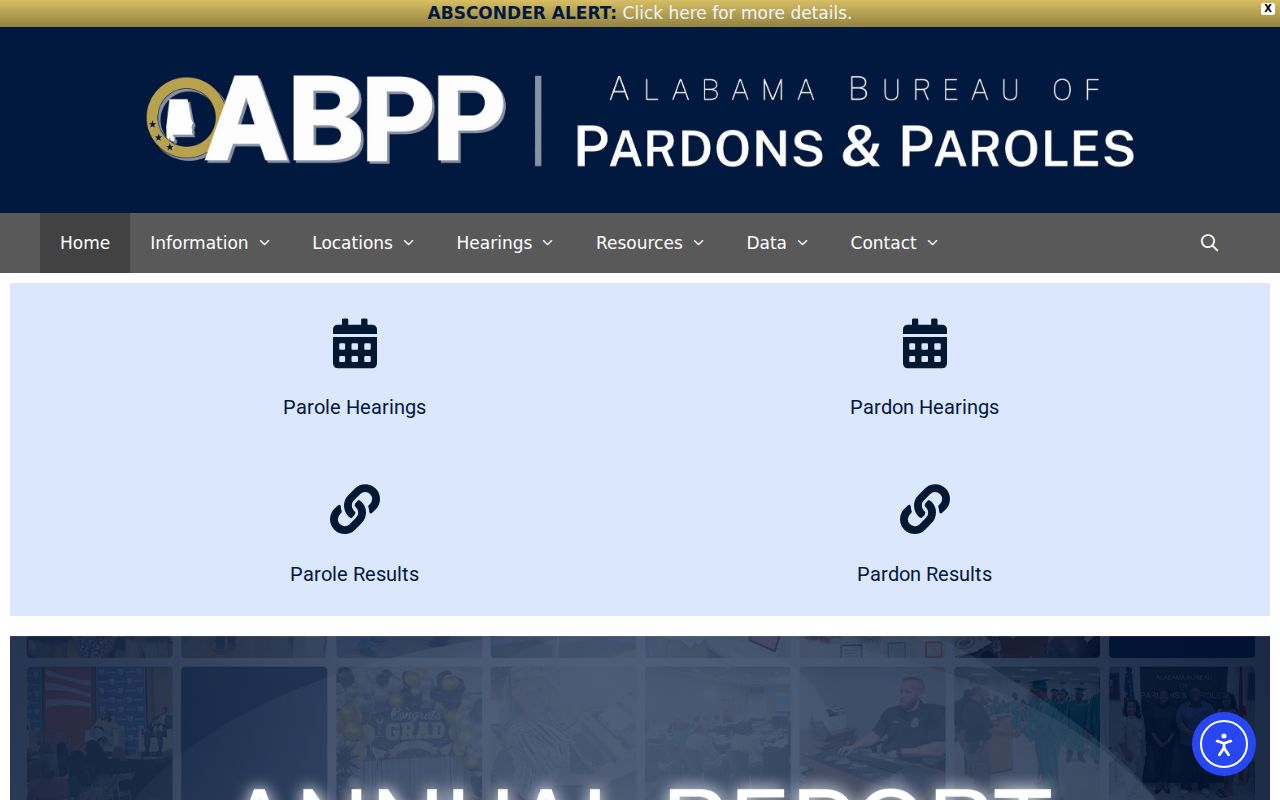
The image represents the state supervision channel that follows a Marion County judgment or prison release.
Supervision case files can contain privileged material. Final orders, hearing notices, and court rulings are more public-facing than an officer's working file.
Criminal Records by City in Marion County
Hamilton, Winfield, and Guin police departments create their own incident records, and each municipal court controls its city cases. Those city channels do not replace the Marion County Circuit Clerk, sheriff roster, or ALEA record. Start at the city level for a police narrative or municipal citation, then route a felony filing, county booking, or statewide personal history to the proper county or state office.
Hamilton Criminal History
6,769 residents · City police and municipal court routes with no verified public case portal.
Winfield Criminal History
4,842 residents · A two-county city with an official ticket payment lookup.
Guin Criminal History
2,136 residents · Police, city clerk, municipal court, and ticket lookup routes.
Marion Records Reach ALEA
A Marion County criminal history does not appear in one leap. Booking fingerprints and arrest information can flow to ALEA's Criminal Records and Identification Unit. The prosecutor decides what to file, the Circuit Clerk records the court path, and reporting agencies send dispositions back to the repository. Delays or matching errors can leave an arrest cycle without the final outcome.
The ALEA Criminal Justice Services page shows the state unit that receives and manages this criminal history data.
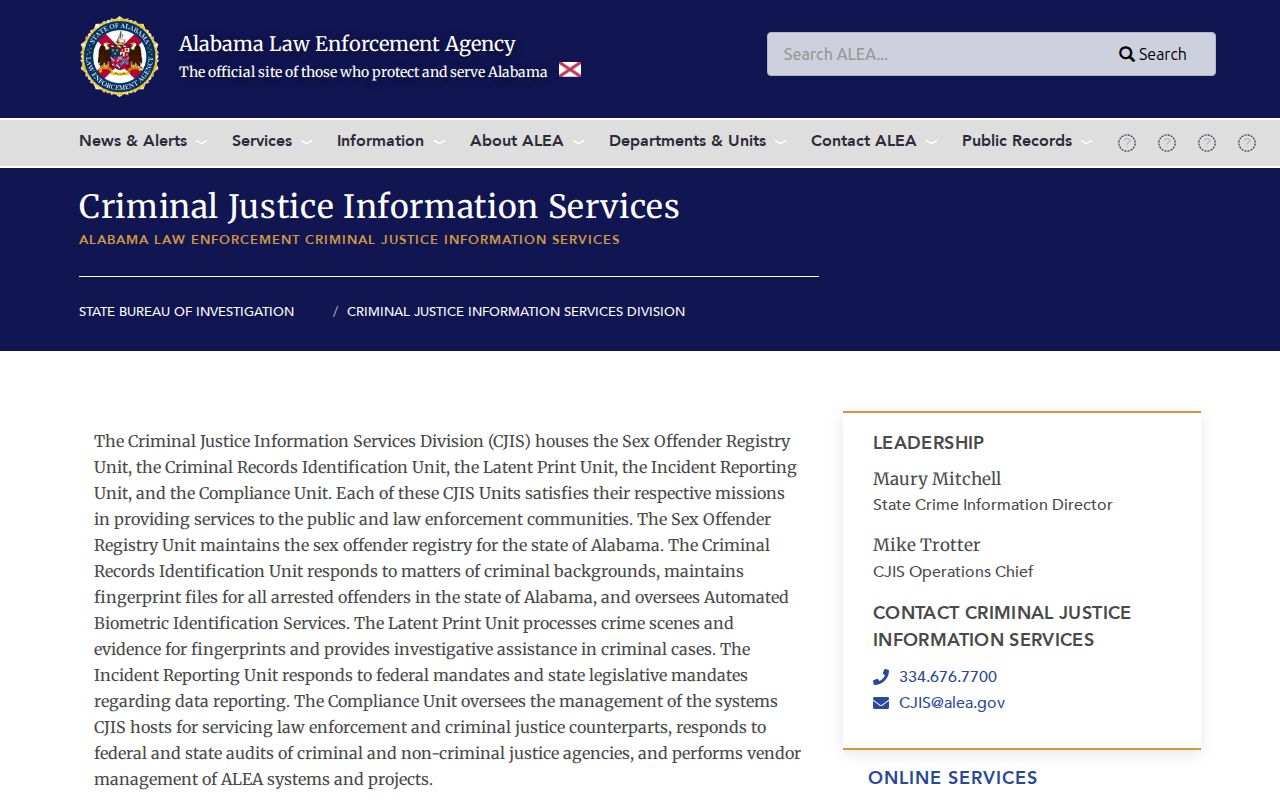
If a personal ALEA review is wrong, Form 46 Appendix A starts the challenge. The requester identifies the disputed arrest or disposition and submits supporting court or arresting-agency documents. The county case file supplies the proof that can correct a missing outcome.
Marion County had 29,097 residents in the July 2025 Census estimate across 742.34 square miles. That rural spread helps explain shared dispatch and why a record can begin with a city police agency, move to the county jail, and finish at the courthouse.
The Census QuickFacts profile provides the county context behind those routes.
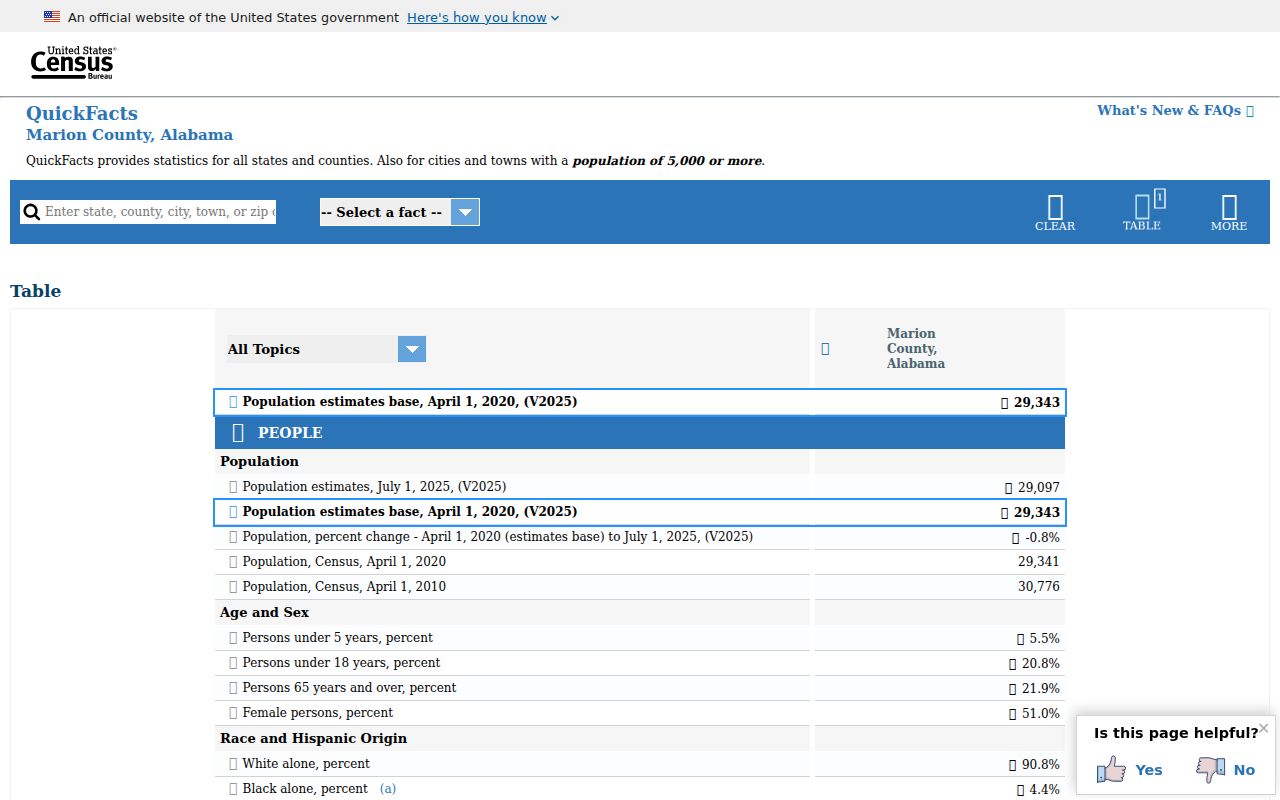
The county profile adds scale without turning dated crime counts into claims about current safety.