
How to Check Criminal History in Hamilton
Start with the kind of Hamilton record you need. A Hamilton police report describes an incident as the police recorded it. A Hamilton municipal court file tracks a city prosecution, plea, setting, and result. A county docket covers Circuit or District Court activity, while a booking entry concerns custody. No single Hamilton search combines all four. That split is important when an early charge later changes or a Hamilton matter never becomes a county felony case.
- For a Hamilton incident report, use the official Police Department page and call City Hall at 205-921-2121 for current records routing.
- Ask for the report by incident number, date, place, involved name, and the exact copy or certification needed.
- Contact Hamilton Municipal Court for city traffic, ordinance, misdemeanor, calendar, plea, and disposition material.
- For a county booking or a Circuit or District case, use the Marion County jail and clerk channels after confirming where the event was filed.
- For your own fingerprint-matched Alabama history, use ALEA Form 46 rather than treating a city or county name search as a full history.
A missing Hamilton result may mean the wrong custodian was searched. It does not prove that no related record exists.
Hamilton Police Record Routing
Hamilton's official department material does not publish a direct records-desk number, a report-copy form, an email address, a copy fee, or a promised turnaround. The documented fallback is City Hall at 205-921-2121. Call before making a Hamilton report trip. State that the request concerns a police incident record, then ask which office currently accepts it and whether identification, proof of eligibility, or payment is needed. The research does not support adding office hours or a fee that the city has not posted.
The official Hamilton city hub shows the civic source readers use for current department routing. The captured view below anchors the Hamilton criminal-record search in the city that holds the source material.
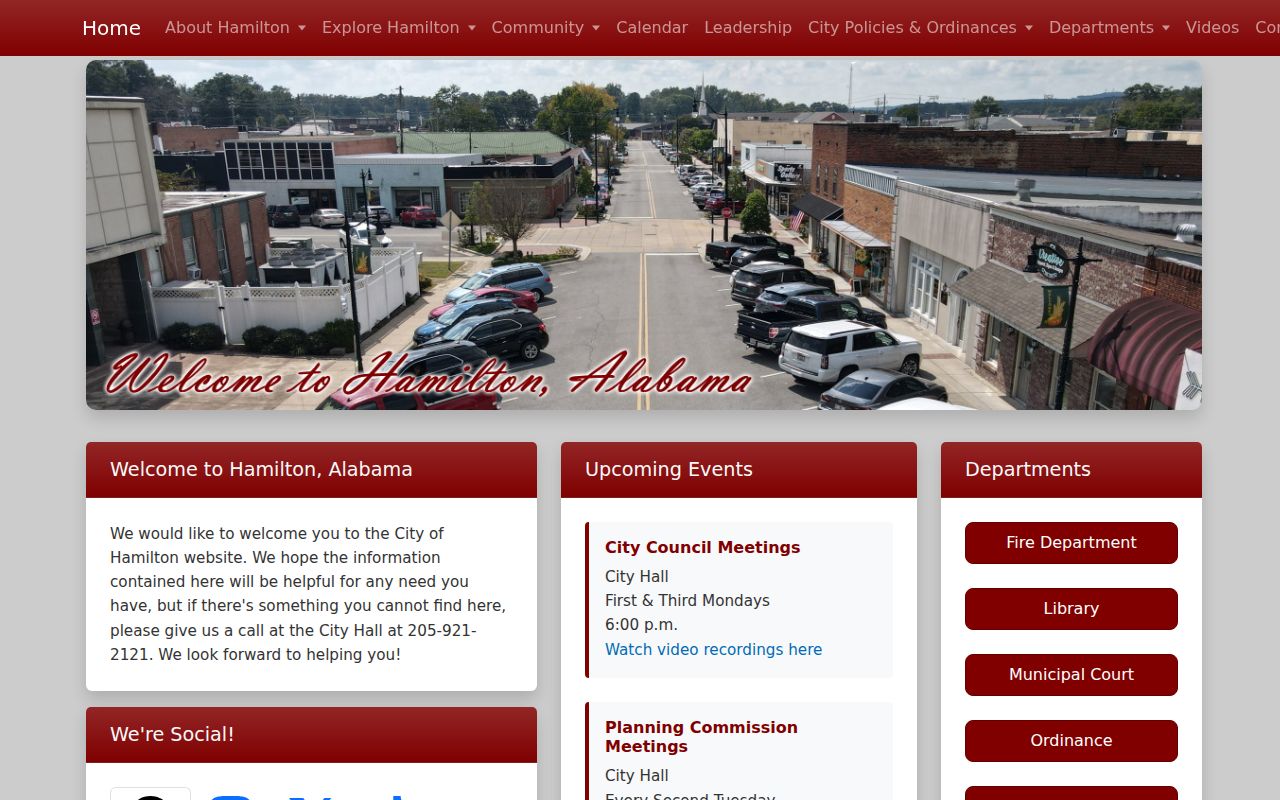
Hamilton City Hall is a routing point, not a substitute for the Hamilton police report or a municipal disposition. Name the exact product so the call reaches the right Hamilton custodian.
The Hamilton Police Department
Hamilton Police is the first custodian for an incident or arrest narrative created by its officers. A useful request identifies the incident number if known, the date and location, the involved person, and whether the request seeks a report, certified copy, video, or another record. Ask the Hamilton office to confirm access, redaction, format, cost, and delivery before sending funds. No official local body-camera fee, retention period, city crime map, arrest blotter, mobile app, or online report portal was located.
The Hamilton Police Department page is the official starting point and is represented in the captured image below.
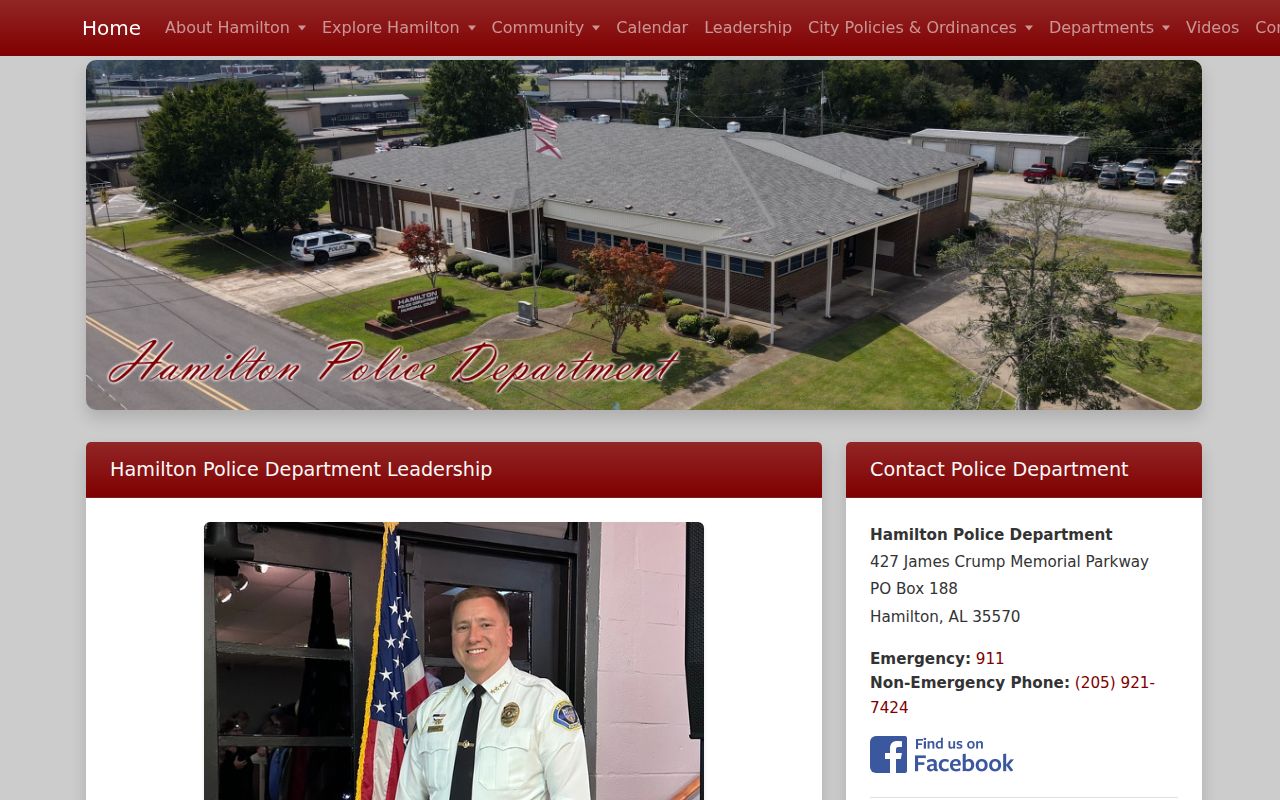
The Hamilton department record can show what officers first alleged and observed. It does not by itself prove a Hamilton conviction or supply the later court result.
Hamilton Criminal Court Calendar
Hamilton's 2026 municipal calendar generally places pleas on the first Wednesday and trials on the third Wednesday at 2:00 p.m. Holiday adjustments can move those dates, so a citation and the current calendar control. That schedule tells a reader when a matter may be heard. It is not a searchable docket and does not show whether a plea was accepted, a case was continued, or a charge was disposed of.
This timing also explains why a new Hamilton case may not yet have a final result. Hamilton police activity can come first, followed by an initial Hamilton court setting and later action on a plea or trial date. Contact the municipal clerk for the current Hamilton status. If the charge was filed in Marion County Circuit or District Court instead, use the county clerk rather than waiting for the next city session.
Note: A listed court date can change, so verify it with Hamilton Municipal Court before relying on an older calendar or citation copy.
Arrests and Bookings in Hamilton
A Hamilton arrest can create a police report, bond paperwork, a booking record, and a court file. Those records do not appear at the same time or say the same thing. Hamilton has not published a city holding-facility page or a rule stating where every arrestee is booked. Use the arrest or bond paperwork, call Hamilton Police through City Hall, or call the Marion County Sheriff's Office at 205-921-7433 before assuming the person entered the county jail.
When Marion County receives the person, the sheriff roster may show the initial Hamilton charge, arresting agency, booking time, and custody status. That entry can change after a Hamilton court appearance. The police incident narrative remains with Hamilton Police, and the filed Hamilton prosecution belongs to the relevant clerk. Broader county booking routes are covered in the Marion County arrest history resource.
An arrest is not proof of guilt. A Hamilton criminal history search should compare the early arrest charge with the final court disposition.
Hamilton Criminal Diversion Records
Hamilton Ordinance 2024-4 creates a discretionary Municipal Court pretrial diversion path. It is a city program, not a countywide district-attorney program. The city prosecutor must approve participation, and the municipal judge keeps discretion. Factors can include prior history, the officer's view, public safety, remorse, cooperation, testing, treatment, and restitution. Some excluded violence, eluding, or weapon categories can require written victim consent.
The published ordinance identifies a $1,000 nonrefundable application fee for Class A matters and DUI, $500 for Class B or C matters, and $300 for other traffic matters. A waiver, reduction, or delay may be allowed for just cause or indigency. The ordinance is not the application form. Ask Hamilton Municipal Court for the current application and process.
Conditions may include restitution, counseling, testing, no contact, community service, or a curfew. Successful completion can lead to a reduction, dismissal without prejudice, or other agreed mitigation. That outcome is not automatic expungement.
Hamilton Municipal Court Records
Hamilton Municipal Court handles city traffic, ordinance, and misdemeanor matters within municipal jurisdiction. Ordinances 408 and 434 adopt municipal misdemeanor and violation provisions. The city has not published a public case-search portal or a court-copy fee. A municipal payment screen should not be treated as a complete docket or certified history. Contact the clerk for the case-action record, current setting, plea, judgment, costs, or disposition.
The official Hamilton Municipal Court page is shown in the image below and is the source for current city-court information.
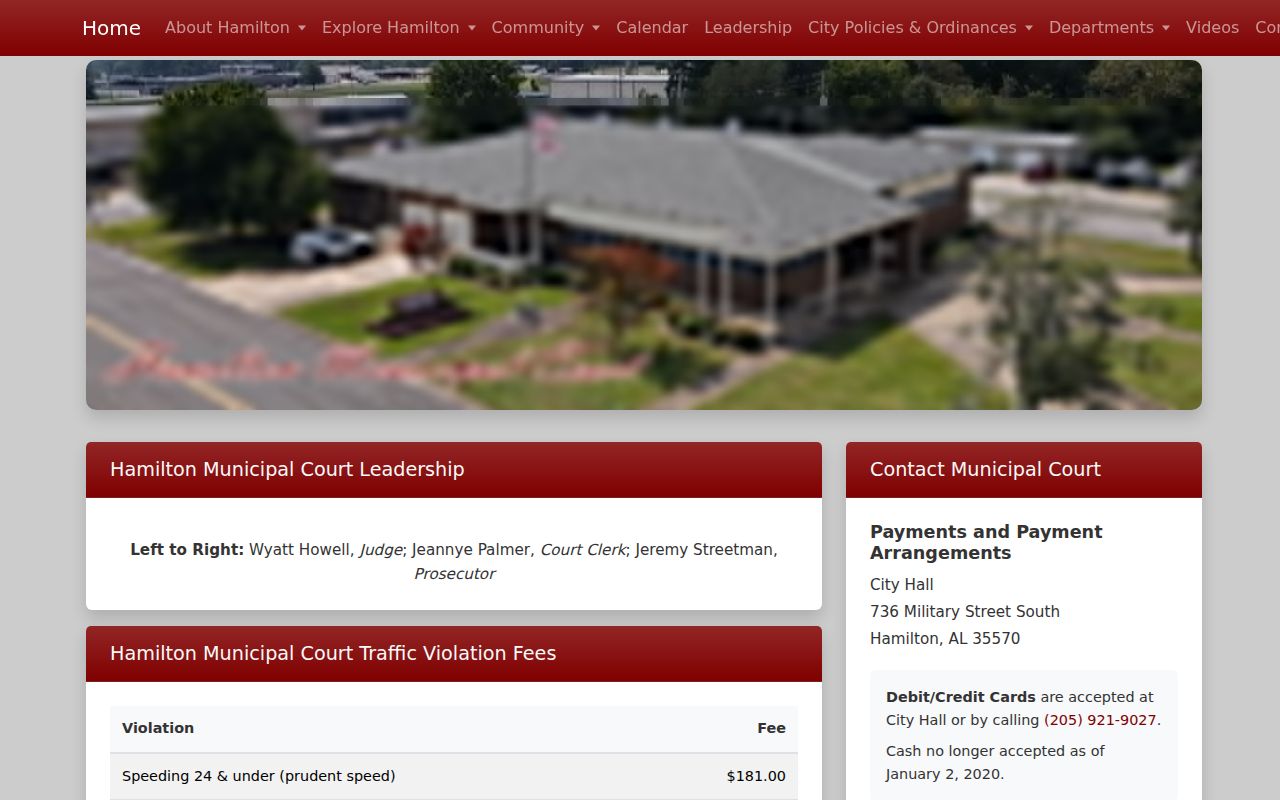
The court page confirms the Hamilton municipal channel, while the actual Hamilton file must still come from the clerk or the authorized city system.
| Court Name | Hamilton Municipal Court |
|---|---|
| Case Types Heard | City traffic, ordinance, and misdemeanor matters within municipal jurisdiction |
| Case Lookup Channel | Municipal clerk, citation, and current court calendar; no public full-case portal was located |
| What the Docket Shows | Case identifier, setting, plea or trial activity, orders, disposition, and financial assessment when present |
| Copies & Fees | Ask the court; no Hamilton court-record copy fee was published |
Hamilton Administrative Docket Records
A Hamilton diversion plea may be held on an administrative docket while the participant completes a written agreement. That detail can trip up a person who sees an early Hamilton plea reference and assumes it is the final Hamilton disposition. The agreement can set individual conditions, followed by completion, termination, withdrawal, reduction, dismissal, mitigation, or sentencing under its terms.
Ask for the current case status and the final order, not just a payment receipt or a calendar entry. A payment portal can help locate or pay a municipal matter, but it is not proof of the whole procedural history. The official-linked Hamilton municipal payment portal appears below as a payment source, not a general criminal-record database.
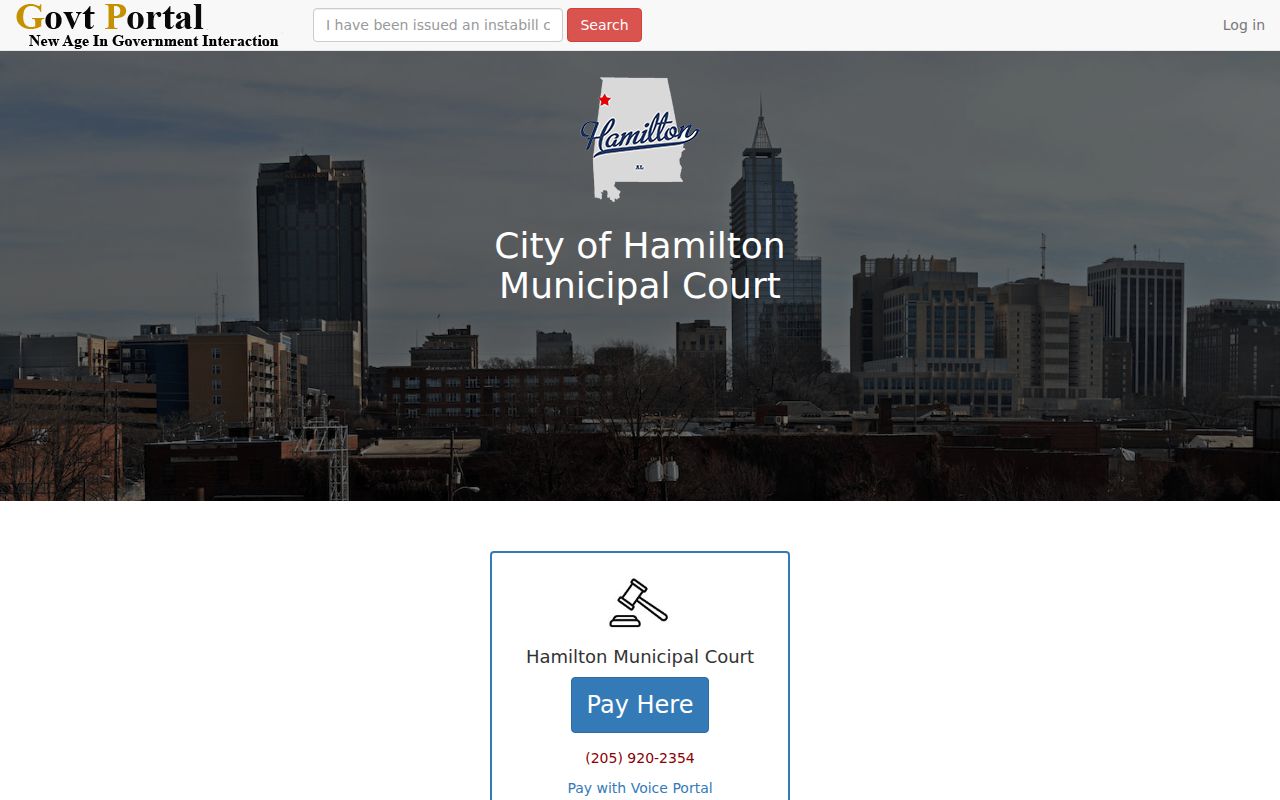
The Hamilton clerk remains the proper source for a certified disposition and for explaining whether a matter is active, held, dismissed, or complete.
Where Hamilton Records End Up
A Hamilton criminal record begins with the office that creates it. Police hold the incident narrative. A city prosecution stays with Hamilton Municipal Court. A felony or county-level misdemeanor moves through the Marion County Circuit Clerk. Booking material belongs to the receiving jail. Fingerprints and later dispositions can be reported into ALEA's Criminal Records and Identification Unit.
Record flow: Hamilton Police Department › Hamilton Municipal Court or Marion County Courts › Alabama Law Enforcement Agency
Recent Hamilton activity is usually clearest at the Hamilton police, court, or booking source. A personal statewide review through ALEA can show fingerprint-linked Hamilton arrest cycles and reported outcomes, but it is not an unrestricted public name search. If a Hamilton arrest appears without its final result, compare the municipal or county docket with the ALEA record and use the official challenge process for your own inaccurate state history.
Hamilton Criminal Record Snapshot
ALEA's historical 2015 table listed 134 index crimes for Hamilton: no homicides, one rape, no robberies, 11 assaults, 20 burglaries, 94 larcenies, and eight motor-vehicle thefts. The population in that table was 6,765. Those figures are dated context only. They cannot rank current Hamilton safety, predict a person's record, or substitute for a present police or court search. Alabama's shift to NIBRS reporting also carries completeness warnings.
Hamilton's role as the Marion County seat matters more to record routing. The county seat moved from Pikeville in 1881, and Hamilton now contains both the municipal system and the county courthouse system. A city citation may stay in Municipal Court, while a felony file goes to Circuit Court only a short distance away. Similar locations do not merge the records. Ask which court number, agency, and case level created the file.
Public Access Rules
Hamilton police and municipal records are subject to Alabama access law, but that law does not make every page public. Active investigations, juvenile and Youthful Offender matters, victim or minor identifiers, sensitive security or medical content, sealed material, and expunged matters may be restricted or redacted. Ask the creator of the record first and describe the exact item sought. The custodian can state whether inspection, a copy, certification, identification, or a fee applies.
Key Statutes:
Alabama Code § 36-12-40 gives citizens a right to inspect and copy public writings except where another rule limits access.
Alabama Code § 41-9-636 controls dissemination from the state criminal-history repository rather than creating a public people-search pool.
Alabama Code § 12-11-30 places felony jurisdiction in Circuit Court, explaining why those Hamilton files leave the municipal level.
For city records, begin with Hamilton Police or Municipal Court. For county court material, use the Marion County Circuit Clerk. For your own fingerprint-based statewide history, use ALEA's official review channel.
Hamilton Report Versus Disposition
A police report and a court disposition should not be used as synonyms. The Hamilton police report records the event, allegation, officer information, and initial charge, subject to lawful redaction. The municipal file records what the city prosecutor filed and what the court did. A county file may replace that route when the matter belongs in District or Circuit Court. ALEA then holds a state-level fingerprint-linked history when agencies report the arrest and result.
- Incident report
- The Hamilton Police record of the reported event and police response.
- Booking entry
- The receiving jail's intake record, which may show an early charge and custody status.
- Disposition
- The court outcome, such as dismissal, acquittal, guilty judgment, or another final action.
- Expungement
- A Circuit Court process that can remove qualifying records from ordinary public access.
Matching the incident number, case number, name, and date can expose a missing link. When a final result matters, obtain it from the court that entered it.